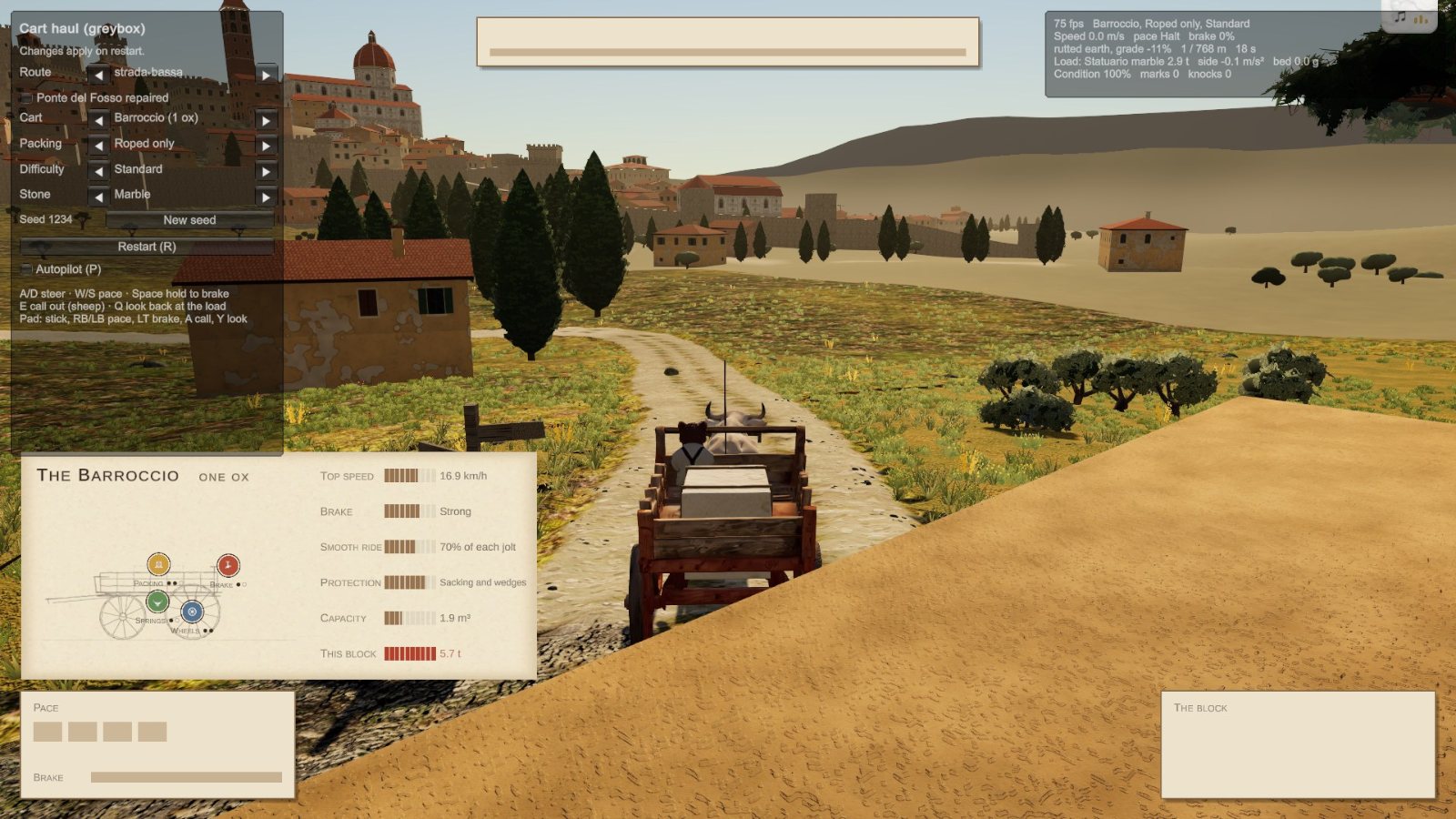
Turns out buying a few tonnes of marble is the easy part.
Up until now, when you bought a block at Il Poggio, it just appeared in the studio. Which was fine, but it always felt like a bit of a cheat. The quarry is on one side of the valley and the studio is on the other. Somebody has to get it there.
Now that somebody is you.
On the cart
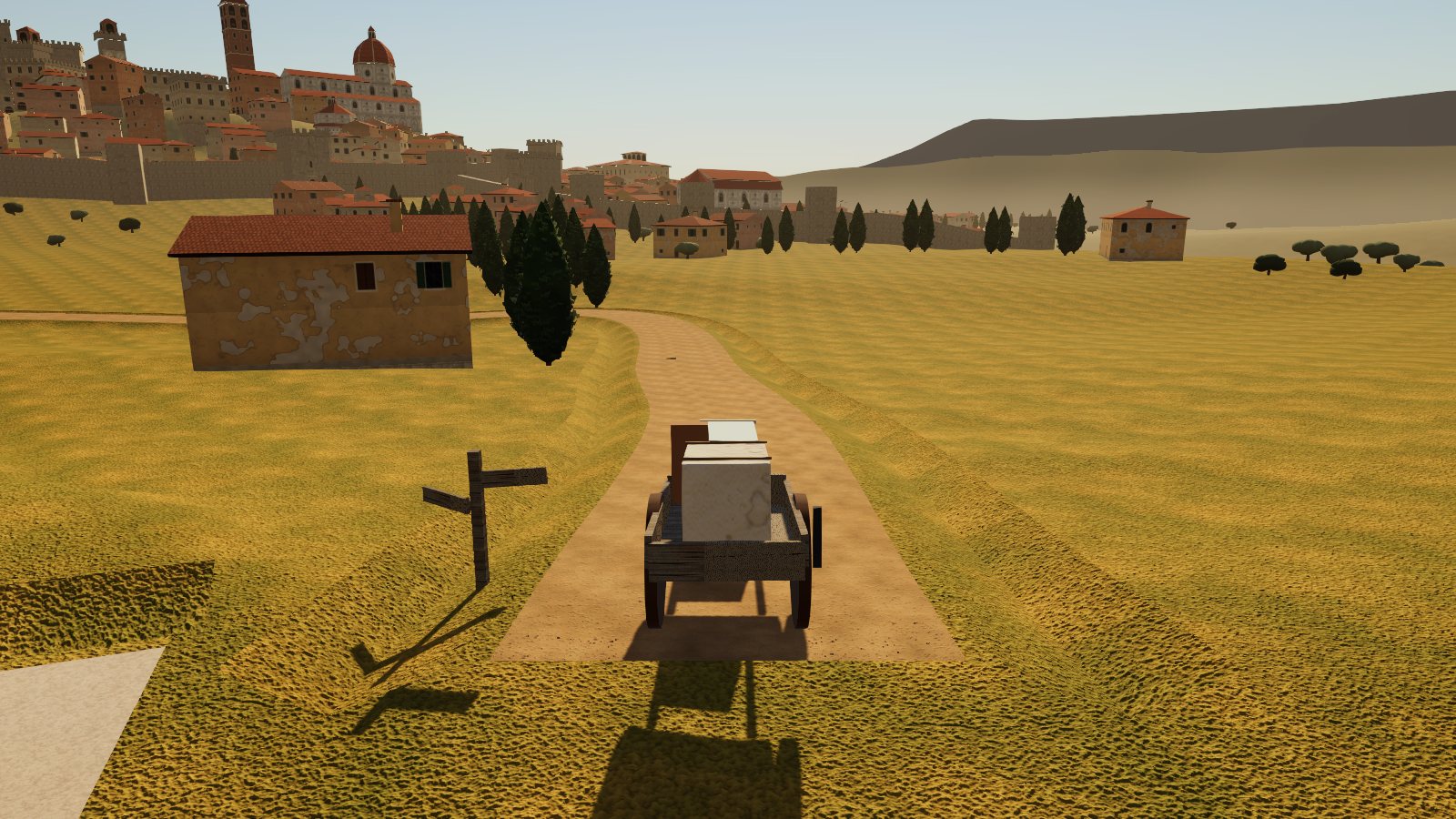
Once you’ve paid Sandro, your block gets lowered onto the cart on a rope and you set off. Matteo sits up front on the driver’s board with a goad in one hand and the brake crank in the other. You set the pace (halt, slow, walk or brisk), steer, and wind the brake on the downhills. The ox does the pulling and leans into the climbs. You’re mostly trying not to let gravity do anything exciting.
We did think about having Matteo walk alongside, which is more realistic, but it would look silly at anything quicker than a stroll. So he sits.
Two roads
The Strada Bassa is the long way round, a bit under 800 metres. It’s rutted in places, with a cobbled stretch, past a pair of brick kilns, a roadside shrine, some milestones, a parked hay cart and a flock of sheep that are not in any hurry. It’s gentle, mostly.
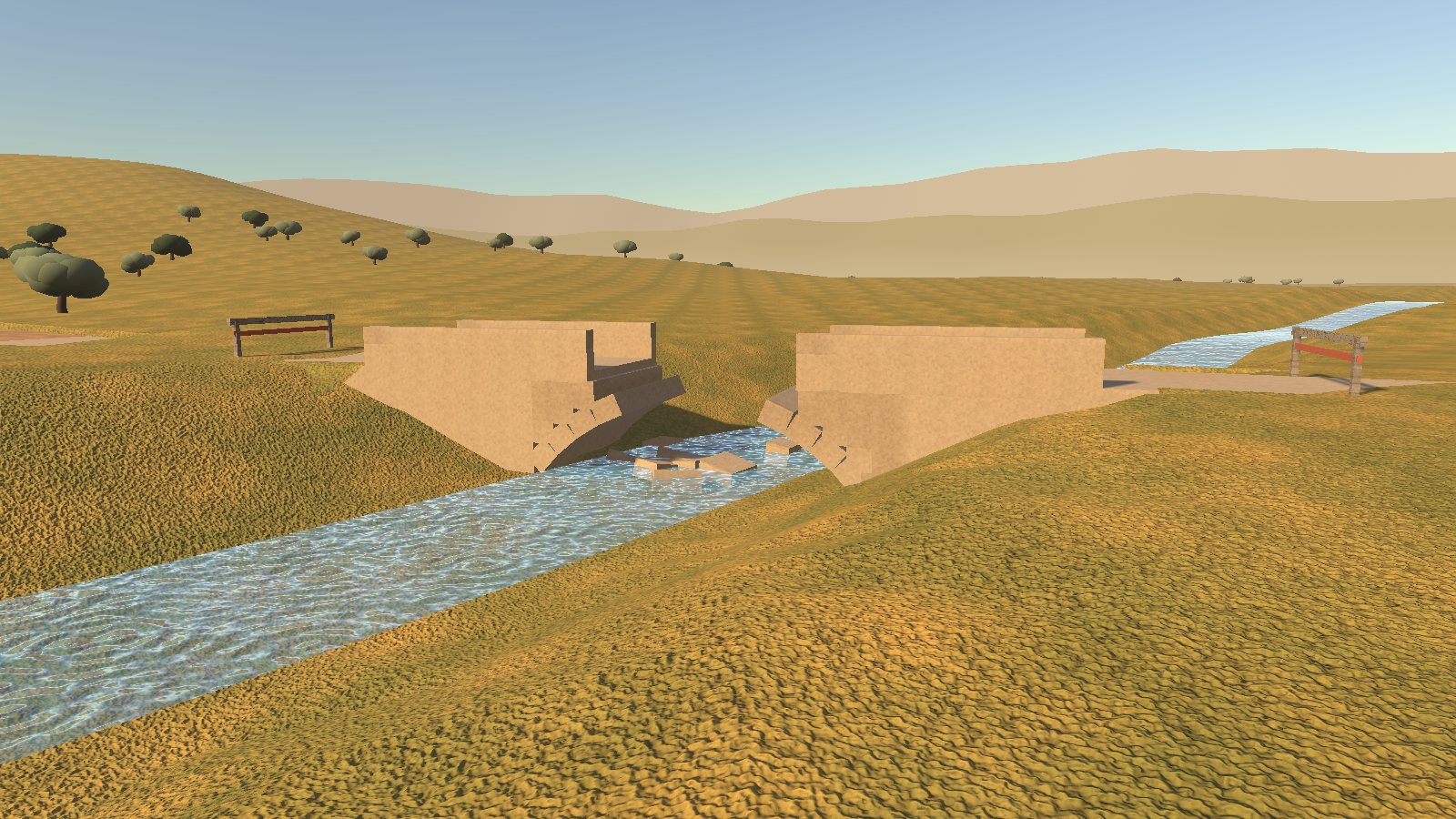
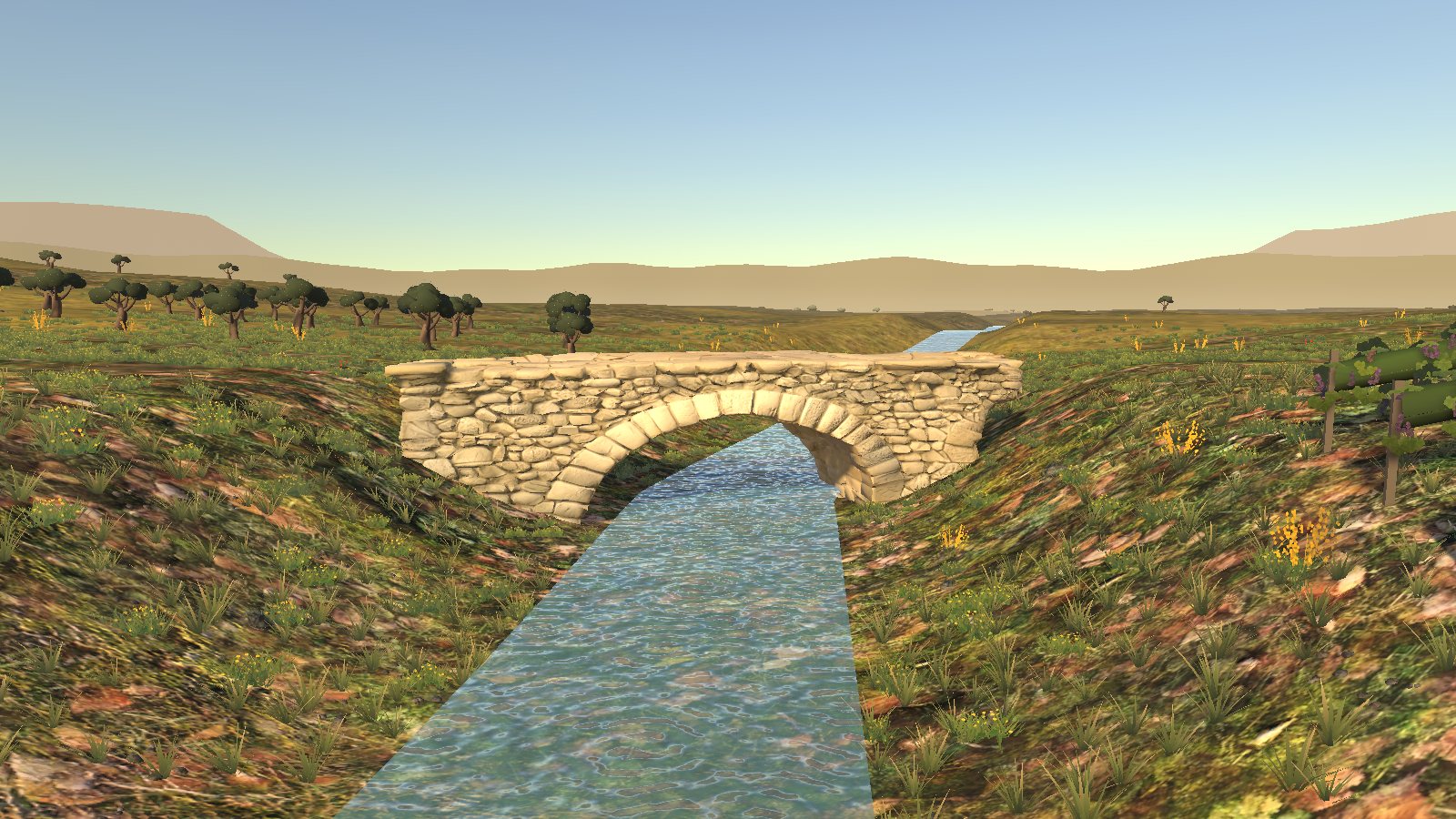
The Via del Fosso is shorter and much steeper, with loose scree off the hillside, a couple of properly tight hairpins and a stream to cross. Except the bridge over the stream is broken. To open that road you have to carve the new keystone for the Ponte del Fosso, a one-off public commission that turns up once you’re reasonably well known. Deliver it and the bridge gets repaired, the road opens, and the map redraws itself with the new route.
Every bump counts
This is the bit we’re most pleased with. When the cart takes a knock, the block takes damage, and that damage is real. The chips get cut into the stone itself, using the same system as the carving. So when you arrive and set the block on the pedestal, the corner you clipped on the cobbles is still missing.
How much you can get away with depends on how you’re playing. On Relaxed the worst you’ll get is a few small chips, and you can let the cart drive itself if you’d rather just enjoy the view. Standard is a bit less forgiving. On Master a bad knock can crack a block or split it outright, and there are no assists at all. That’s the “should you be able to ruin a piece?” question from back in June, answered: only if you ask to.
Bigger carts
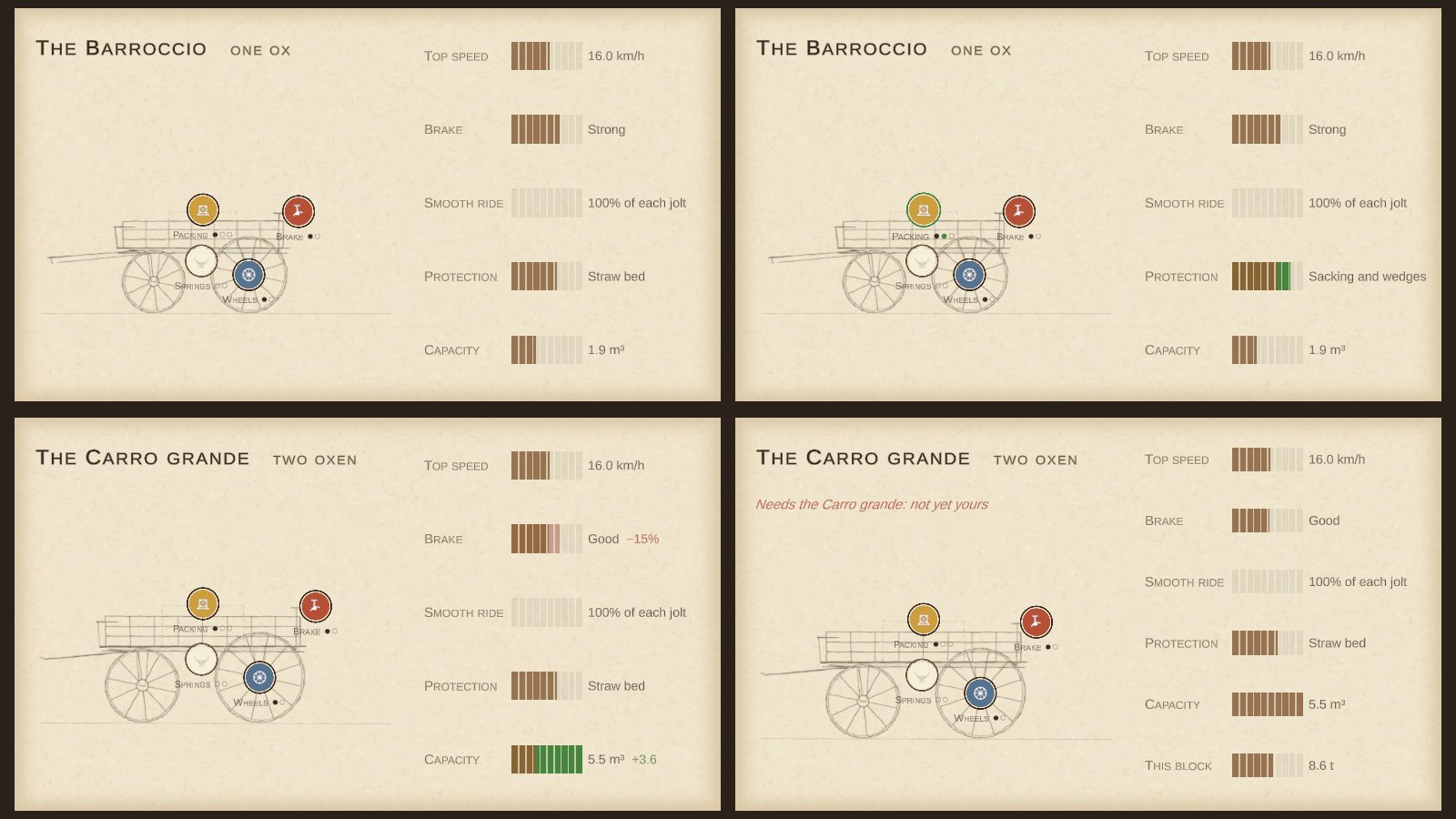
You start with a little one-ox Carretto that takes small blocks. Later on there’s the Barroccio, which takes much bigger ones and has a proper screw brake, and eventually the Carro grande with two oxen for the really ambitious pieces. The Emporio sells upgrades too: better packing (straw, then sacking and wedges, then a full crating frame), greased hubs and iron tyres, a stronger brake and sprung beds. Get famous enough and Sandro will deliver for a fee, so you can skip the drive altogether when you just want to carve.
Things that went wrong
Plenty. The first version of the road texture rippled exactly like wet sand. You’d set off from a marble quarry in Tuscany and drive along what was obviously a beach. It’s now a pale limestone grit, which is what the white roads round there actually look like.
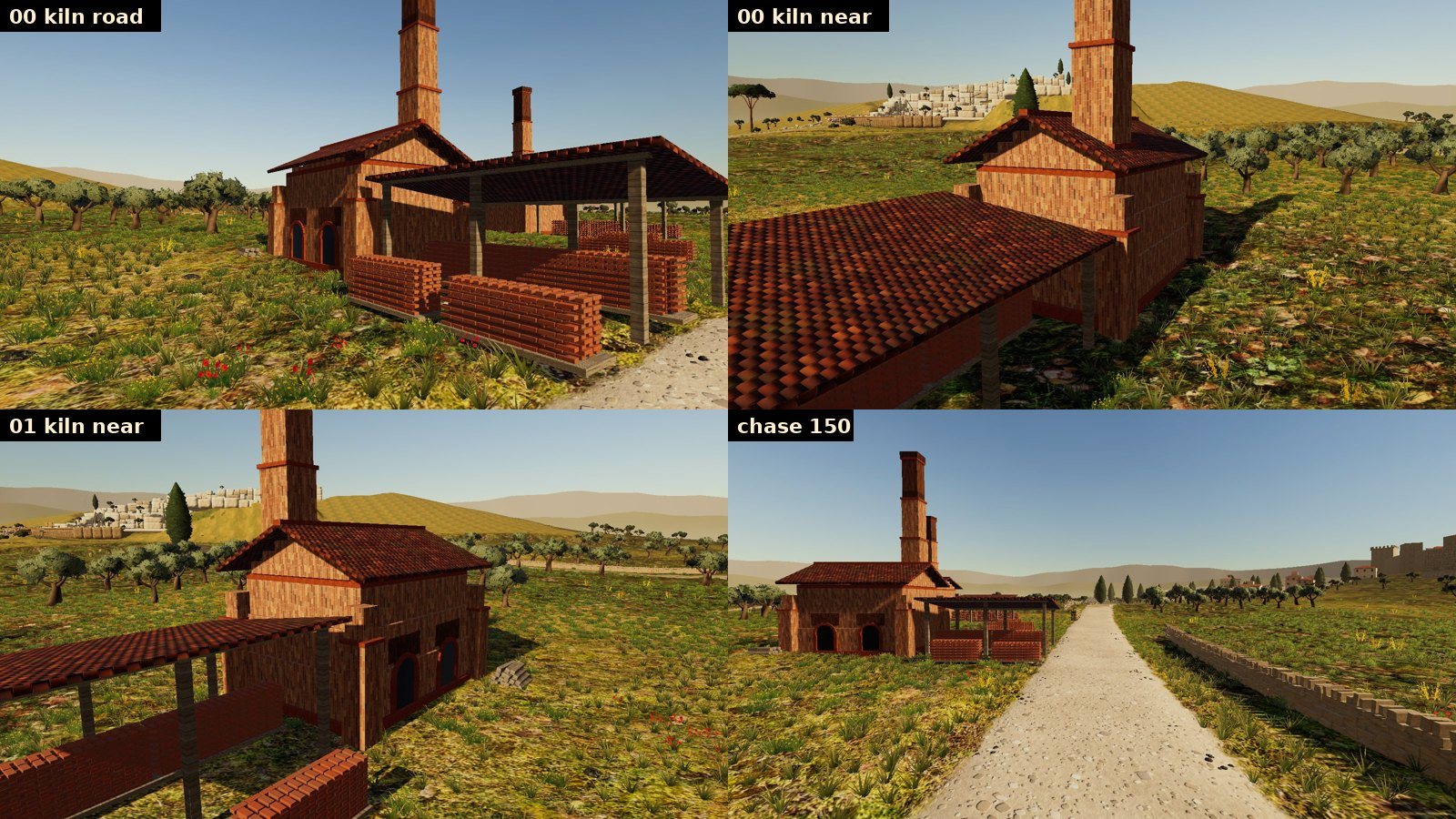
The kilns started life as two smooth orange blobs that from ten metres away looked like giant jelly sweets. They’re now proper brick kilns with buttresses, stoking arches, tall chimneys, drying sheds and stacks of bricks with gaps between them.
And the Carretto, the little starter cart, was meant to have two wheels. It ended up with four. We looked at it for a while, decided it looked right, and left it. Nobody has complained yet.