This one’s a few weeks late, and for once it’s not entirely our fault.
Part of how we keep the stone working is a big set of automated tests, and a fair few of them hammer the GPU. Somewhere along the way the graphics card in the main dev machine decided it had had enough and started resetting the driver halfway through test runs. Screen goes black, everything recovers, and Unity sits there looking confused. Repeat.
We lost more time to that than we’d like to admit. The fix for now is that the heavy GPU tests only run when you ask for them, one at a time, instead of all at once every time. Not ideal, but it means we can get on with the actual game. Anyway. Scoring.
What were you meant to carve?
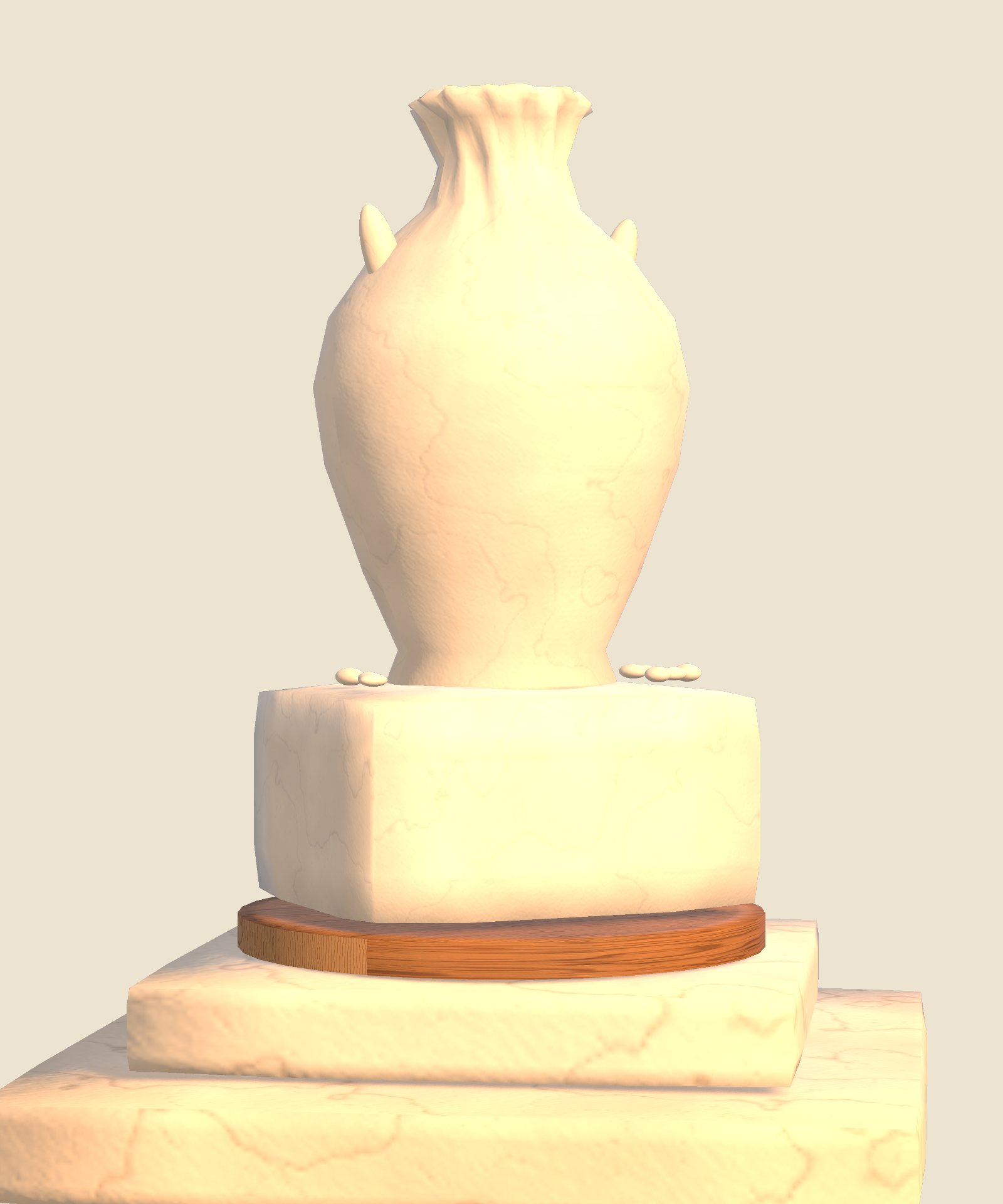
When you take on a piece, there’s a hidden target shape sitting inside the block: the vase, the urn, the doorstop, whatever the job is. You never see it directly. But the game always knows where it is, and at any moment it can compare what you’ve carved against it.
The guide
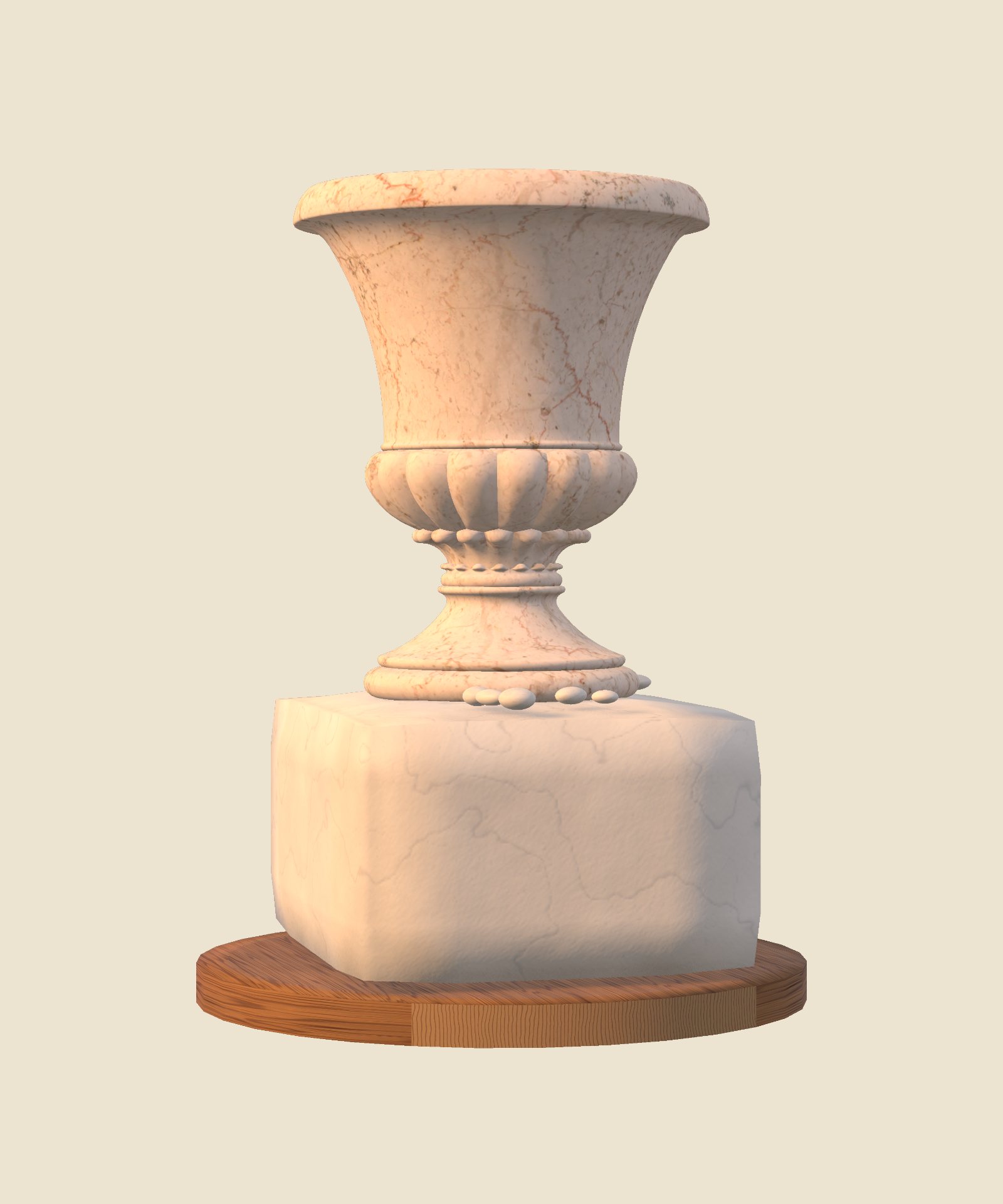
Carving blind would be miserable, so you can switch on a guide that tints the surface. One colour for “there’s still stone to take off here”, one for “that’s spot on”, and one for “you’ve gone too deep”. It’s a bit like an X-ray of what you’re aiming for.
We go back and forth on how much to lean on it. With the guide on all the time, it starts to feel like colouring by numbers. Without it, unless you’re very good at judging shapes, it’s frustrating. At the moment the plan is to make it the main thing early on and let you rely on it less as you get better.
The score
Under the hood, the score comes down to two numbers: how much stone is still left that should have gone, and how much has gone that should have stayed. They’re combined using a similarity measure with the rather grand name of a Tversky index, which lets you weight the two kinds of mistake differently.
Right now, cutting too deep counts about three times worse than leaving too much. That’s realistic. You can always take more off, but you can’t put it back. But having played it a fair bit now, we’re not sure it’s fun. A piece that’s clearly a lovely vase can still come out with a fairly harsh number because one side is a couple of millimetres thin.
So what does “good enough” mean?
We think there needs to be a clear line where a piece is good enough to hand over, with everything above it as a bonus rather than a requirement. Something like “roughed out”, then “taking shape”, then “good enough to deliver”, then “fine work”, then “masterly” right at the top. The client is happy once you’re over the line, and the extra effort is for your own pride (and maybe a bit more money).
Those words might change. The weighting almost certainly will. If you’ve got strong feelings about how strict a stone carving game should be, the comments are open.