
Carving is lovely, but on its own it’s a toy. What turns it into a game is having someone to carve for. So this month has mostly been about commissions.
The loop
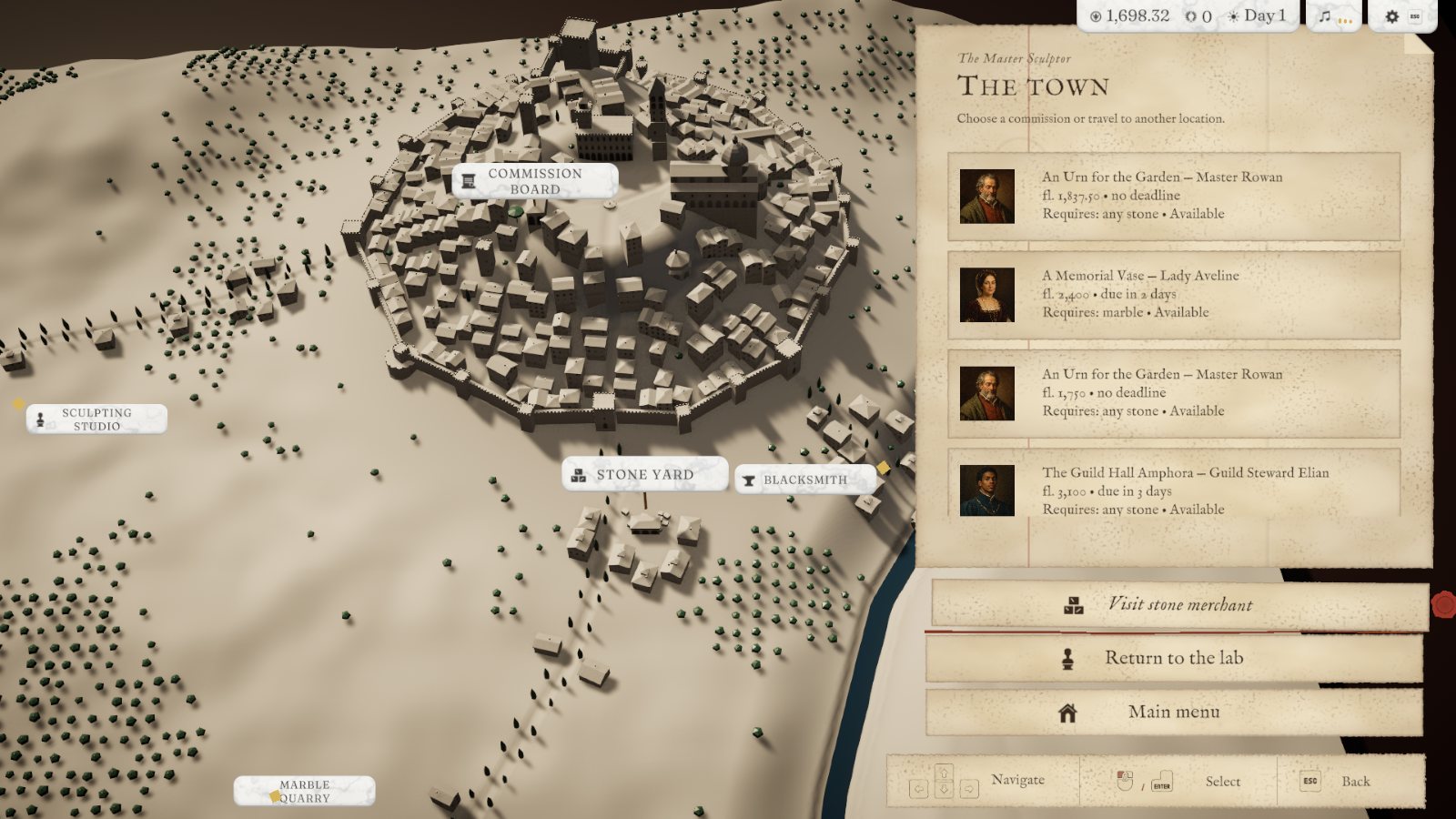
Here’s how a job goes. Someone in town posts a commission on the board. You read it, decide whether you fancy it, and maybe haggle a bit over the fee. Then you head up to the quarry yard, buy a block of the right stone that’s big enough, and get it back to the studio. You carve it. You deliver it. You get paid, and, more importantly, people start to know your name.
That last part matters. Reputation is what opens up better jobs, better stone and better tools. A new sculptor gets asked for doorsteps. A known one gets asked for fountains.
The spreadsheet
Every commission lives in one big spreadsheet: who’s asking, what they want, how hard it is, what they’ll pay, and a short brief in their own voice. There are thirty-three in it so far, and writing the clients has easily been the most fun part of the whole project.
A few favourites. The Boastful Farmer, who wants his prize turnip immortalised in marble so the neighbours never forget it. The Cheese Guild, who are extremely serious about cheese. Rosa the baker, who just needs a doorstop because the bakery door keeps blowing shut, and who is probably the most reasonable person in the entire game. And at the posh end of town, a guild hall that wants an amphora, a noblewoman after a memorial vase, and a gardener at the palace who needs an urn for the terrace.
Juggling
Your studio has six workshop slots, so you can have a few pieces on the go and swap between them. Start the big job, get bored, knock out a quick doorstop for some easy money, then go back. Deadlines exist, but they’re gentle and some jobs don’t have one at all. We’d rather you never felt rushed.
Stone
White Carrara is the bread and butter, and it’s what most early jobs want. Better known sculptors get offered rarer stuff: green Verde Alpi, red Rosso Levanto, and further up the ladder some properly exotic material. Different stones look different and cost very different amounts, which makes picking the right block a real decision. Buy too small and you’re stuck. Buy too big and you’ve wasted money and you’ll be roughing for ages.
The honest bit
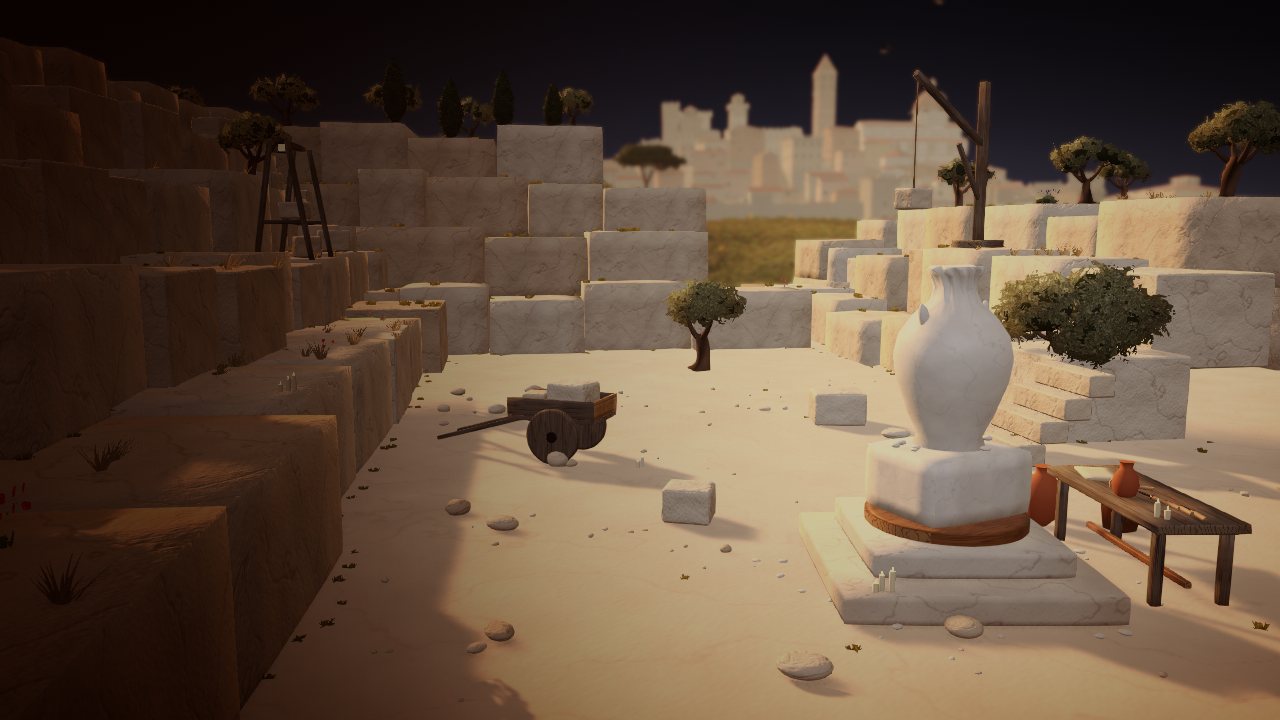
Of those thirty-three commissions, you can currently play three. All three are vases or amphorae.
The bottleneck is the target shapes from the scoring post. Every commission needs a clean, solid 3D model of the finished piece, and they take time. The geometric ones like an obelisk, a cannonball, a millstone or a sundial block can be built from simple shapes and are fairly quick. The organic ones are another matter entirely: a lion, a gargoyle, and yes, the turnip.
So that’s a big chunk of the next few months sorted. Thirty to go.