
So, about those heavy blows.
Real marble doesn’t just quietly let you remove it. Hit it hard near an edge and a corner snaps off. Hit it hard in the wrong place and a crack runs further than you wanted. Sculptors spend years learning where stone will and won’t hold, and we wanted at least a little of that in the game. Otherwise the point chisel is just a slightly louder rasp.
Little bits holding hands
Without getting too deep into it: as well as the “how much stone is here” grid from the stone post, the block also keeps track of how strongly each little region is bonded to its neighbours. A strike puts stress into the stone around the tip. Light blows mostly just remove material. Heavy ones near a thin edge can break bonds, and once a chunk isn’t connected to the main block any more it comes away as its own piece. It falls, bounces, and sits on the floor looking guilty.
Working out which bits are still attached sounds simple until you try to do it quickly on a block with thousands of regions, every time anything breaks. That check runs on the GPU too, and it was rewritten more than once before it stopped either missing pieces or detaching ones that should have stayed put. There was a memorable afternoon where a single tap on a vase made the entire top half float off.
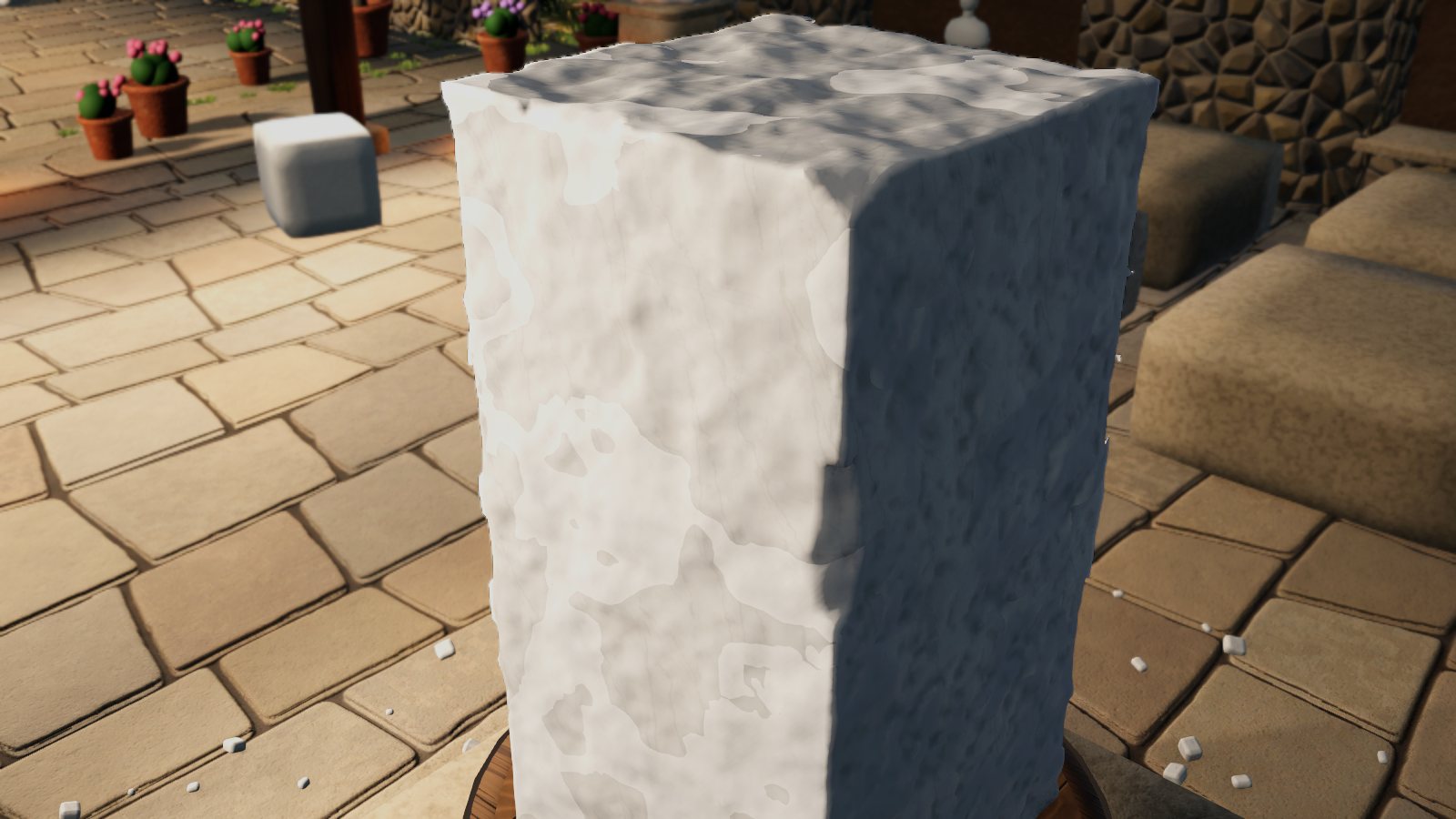
The stone complains
Breaking things by surprise isn’t fun, so the stone warns you. Line up a heavy strike somewhere risky and the marker at the chisel tip shifts from green through amber to red. It’s still your call. Sometimes you want that corner gone, and a big blow is the quickest way to do it.
Splitting on purpose
The flip side of stone breaking is that you can make it break where you want. Quarrymen have split blocks the same way for centuries: drill a line of holes, drop a pair of thin steel shims into each one (the feathers), slide a wedge between them (the plug), and tap the wedges in turn. The tension builds along the line until the whole block cracks cleanly in two.
In the game you mark a chalk line on the block, set your points along it, and tap away while the ring of the wedges climbs in pitch. Then it goes. It’s by far the quickest way to get rid of a big unwanted slab, and it’s very satisfying when it works. Right now it lives on a key press while we work out how it should fit in with the other tools.
The big question
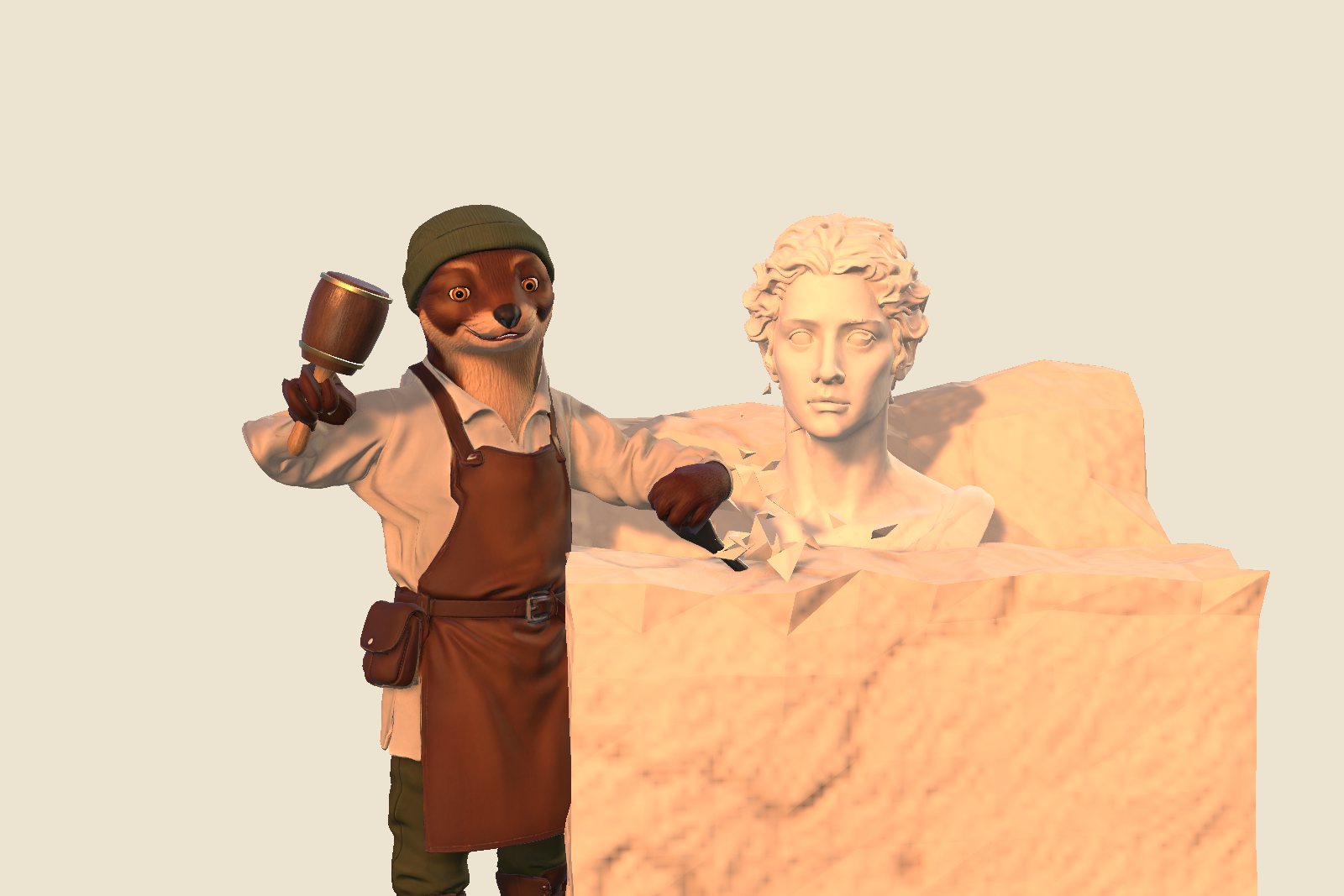
All of this raises something we’ve been going back and forth on for weeks. Should you be able to ruin a piece?
On one hand, it’s stone. The tension of “one bad strike and it’s over” is part of what makes carving feel like carving. On the other, this is meant to be a cosy game, and losing an evening’s work to one misclick is the opposite of cosy.
We haven’t decided. The current thinking is that it should depend on how you choose to play, gentle by default with the option to make the stone less forgiving if you want that. But that’s the current thinking, and it’s changed three times already.